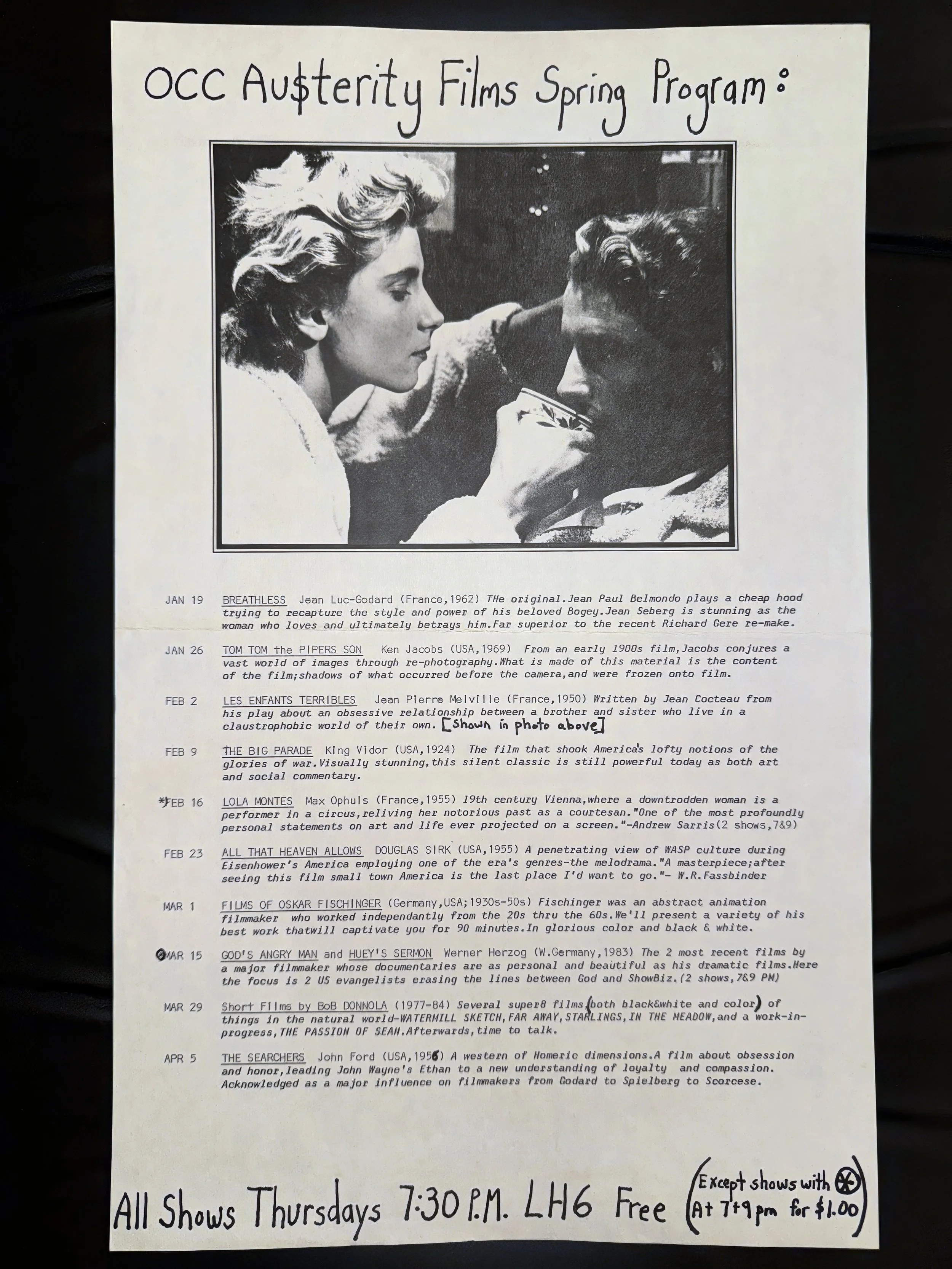
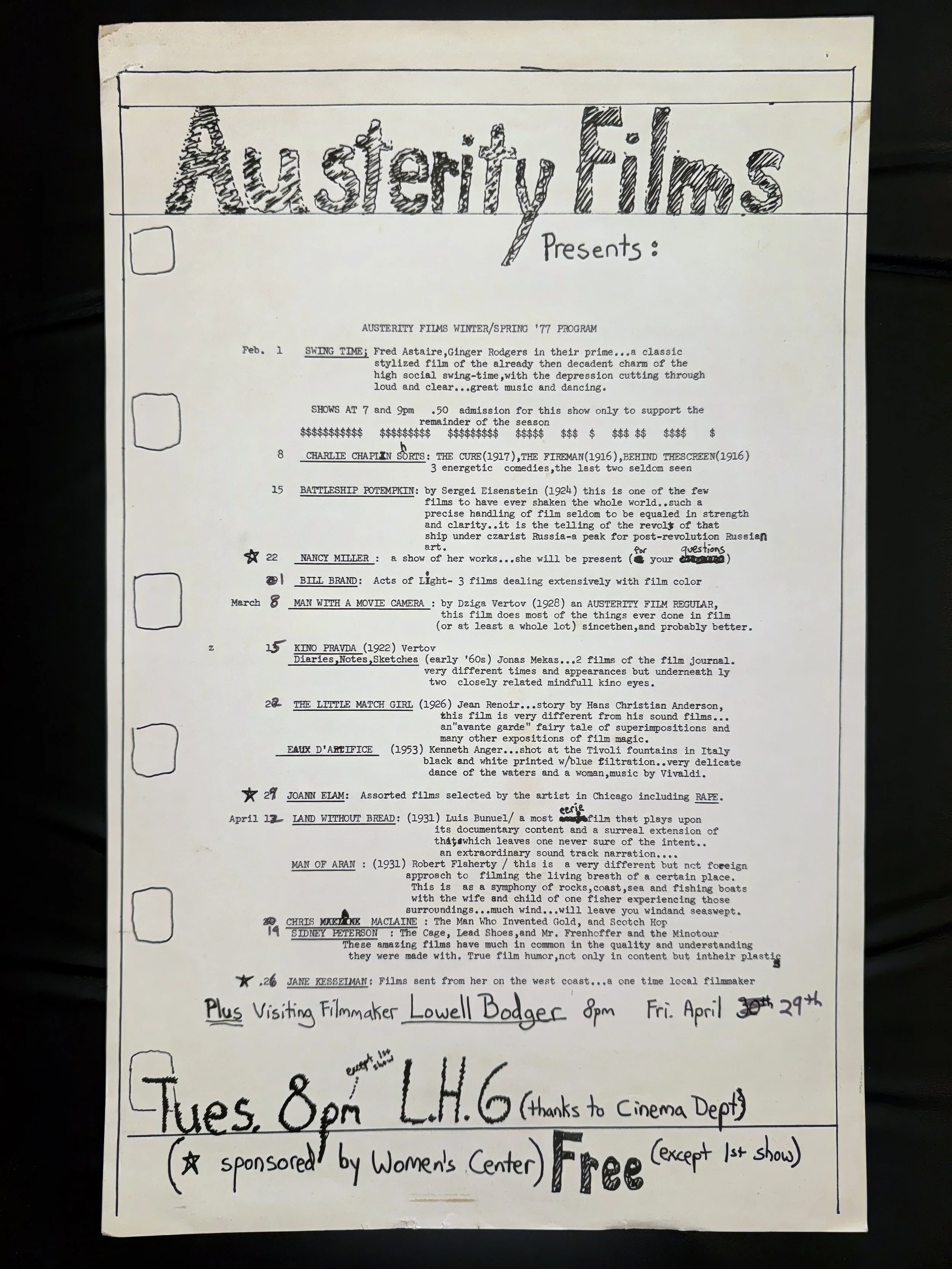
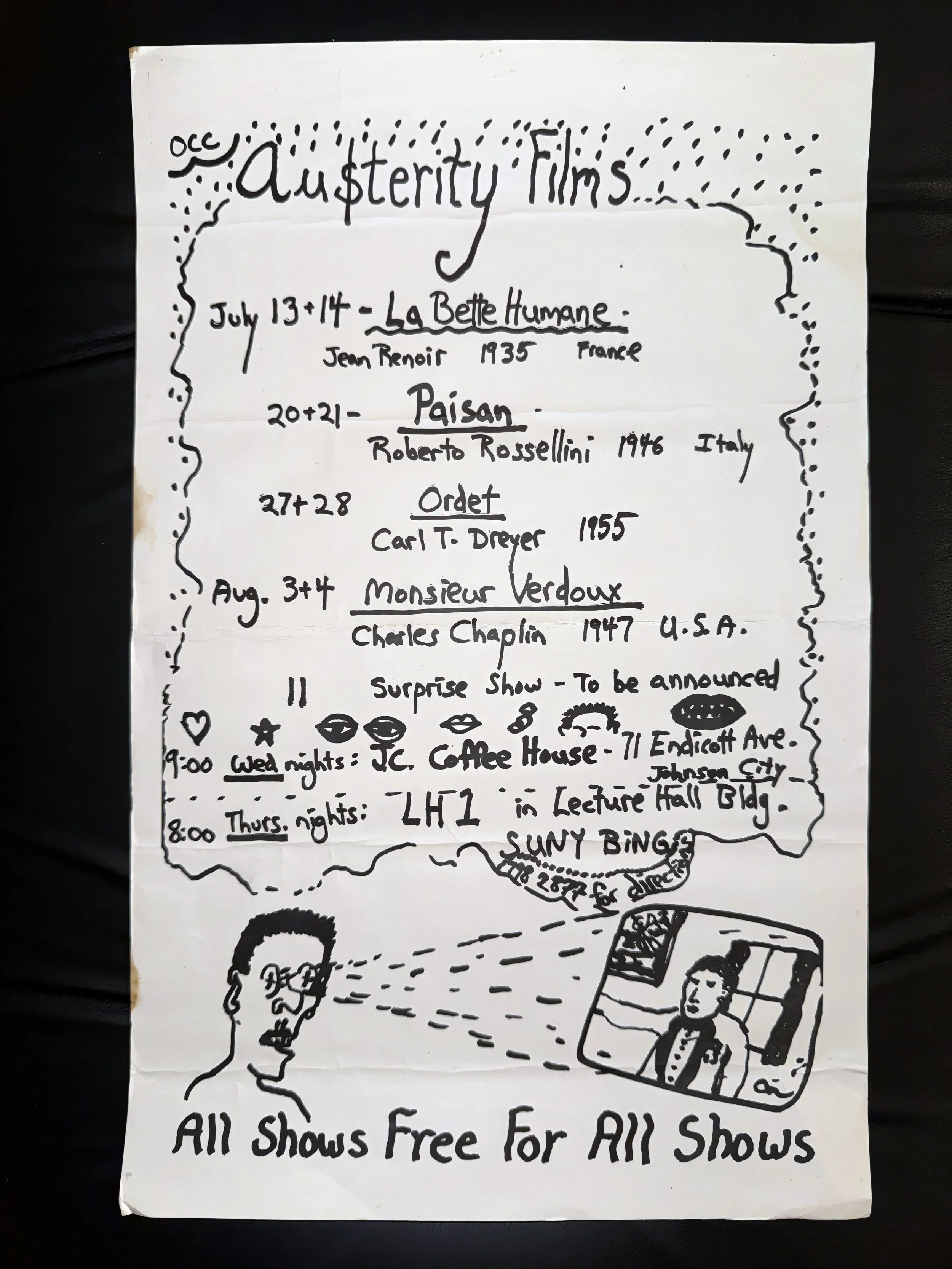
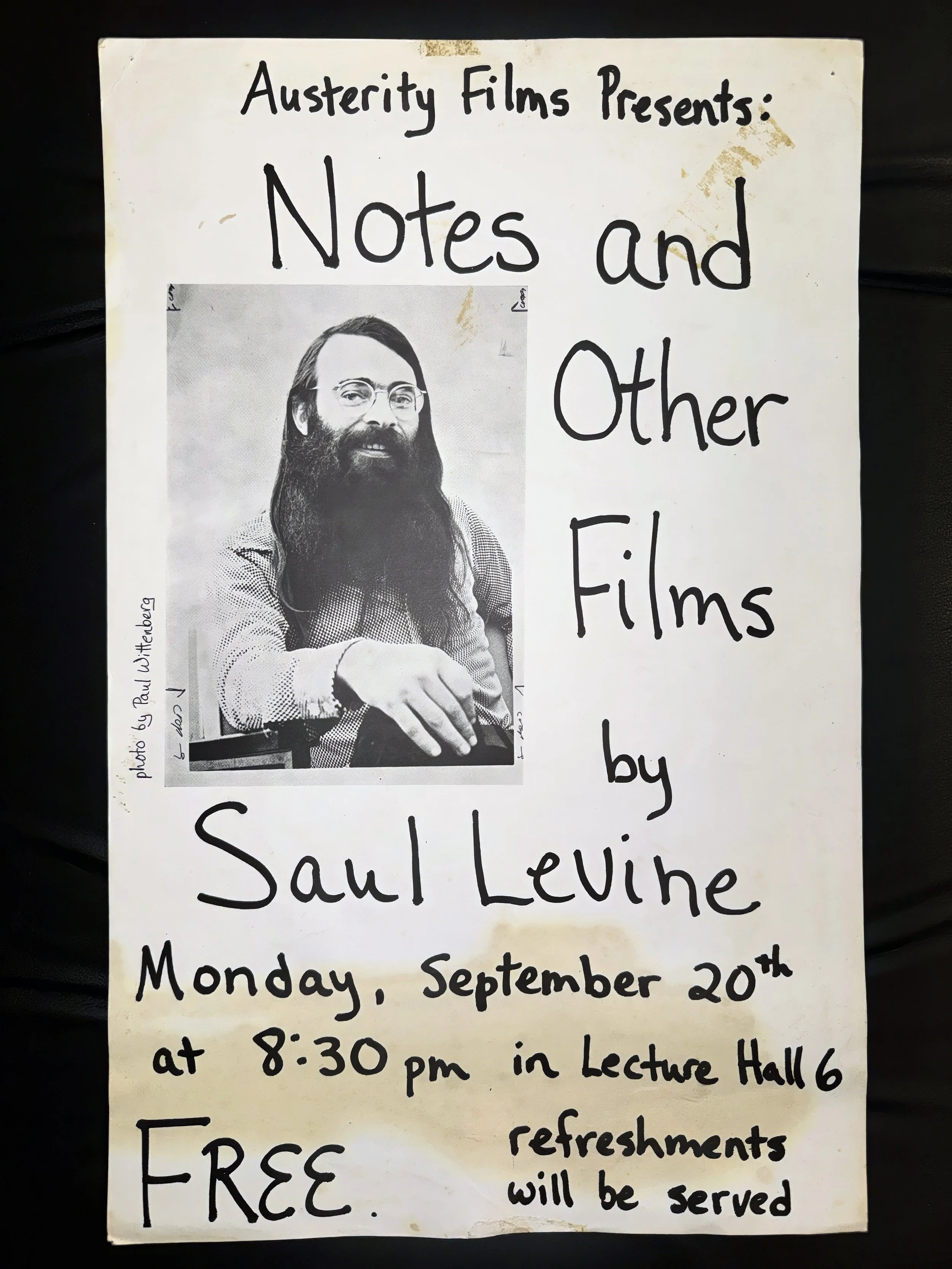
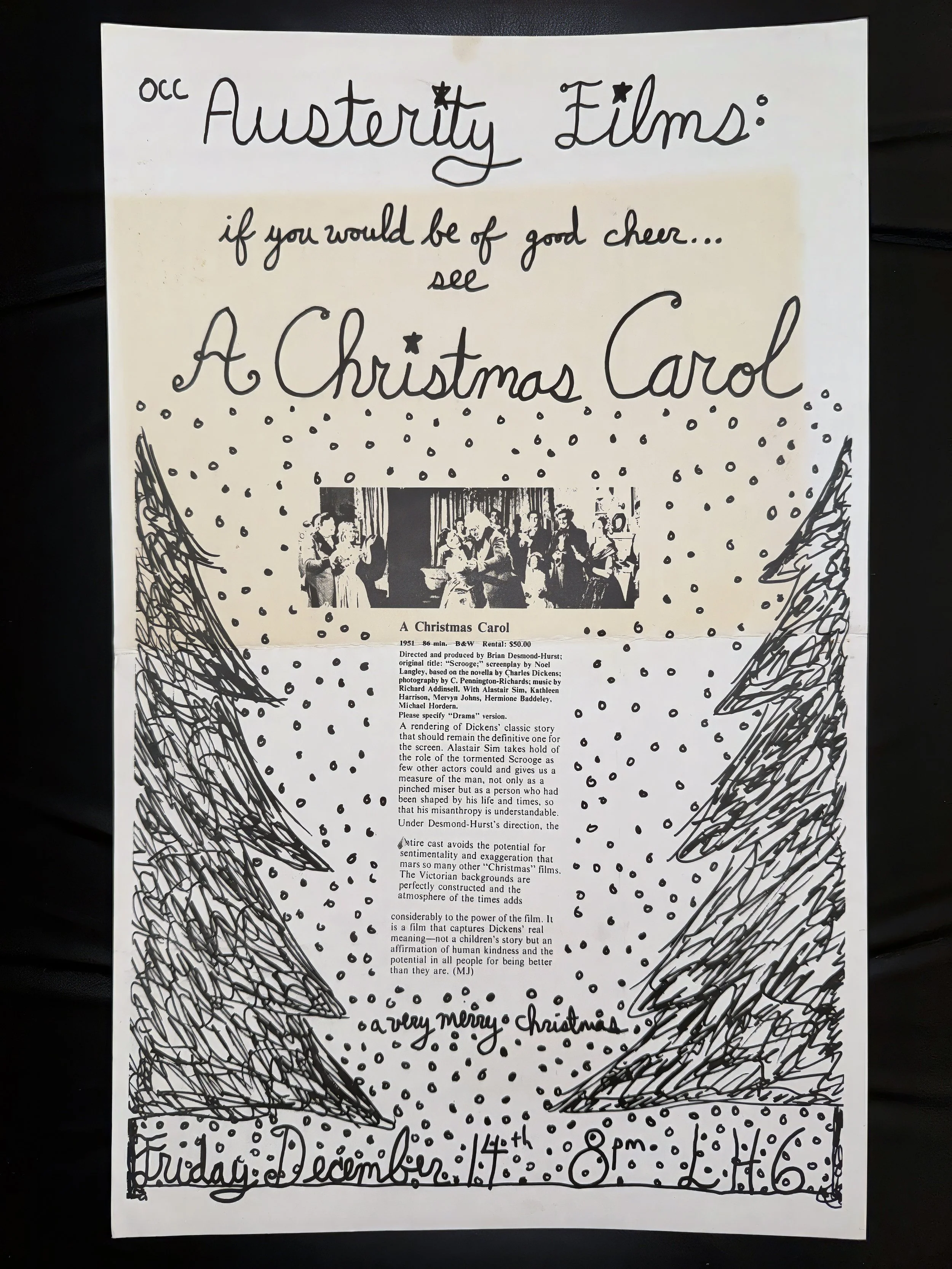
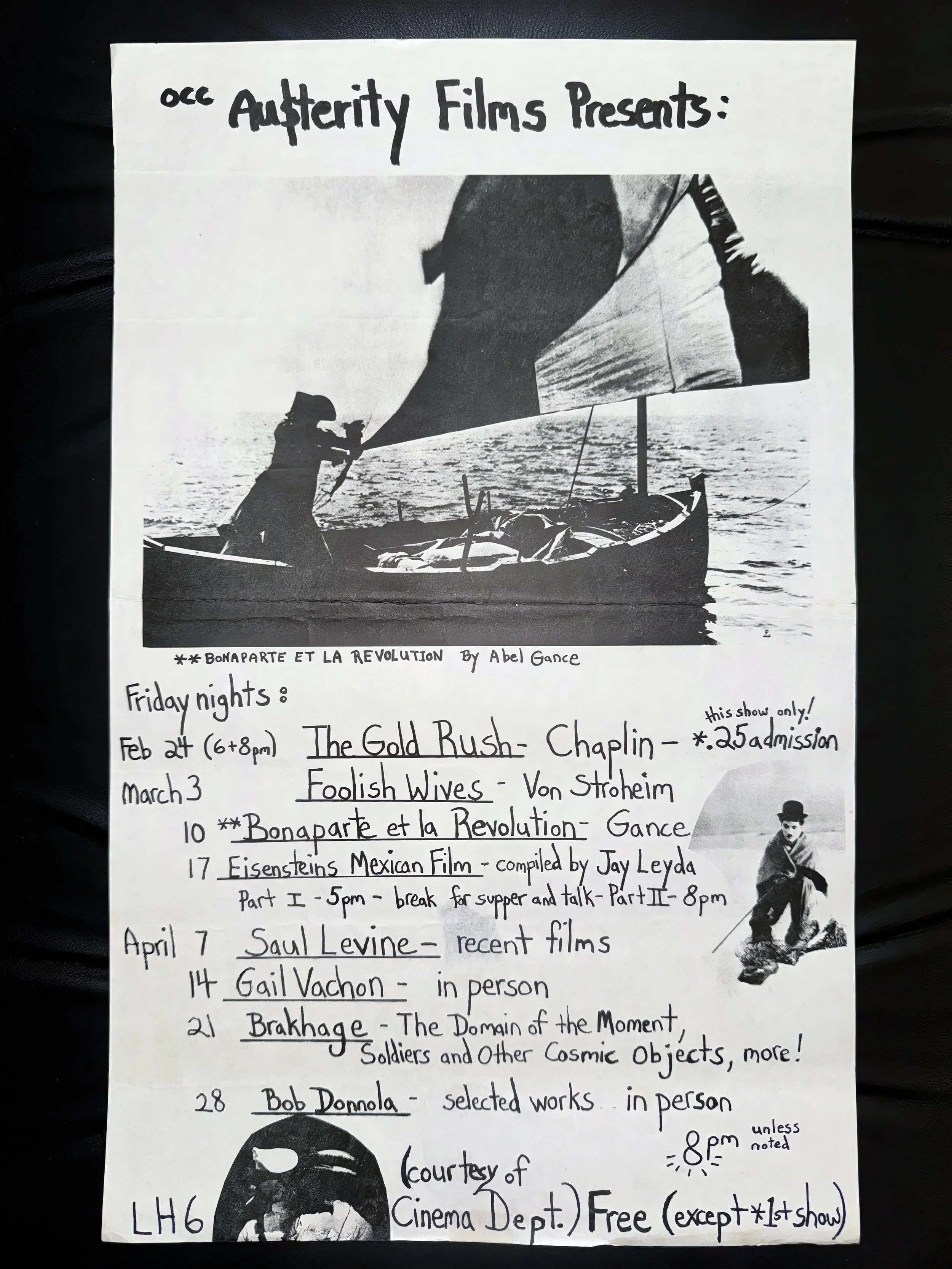
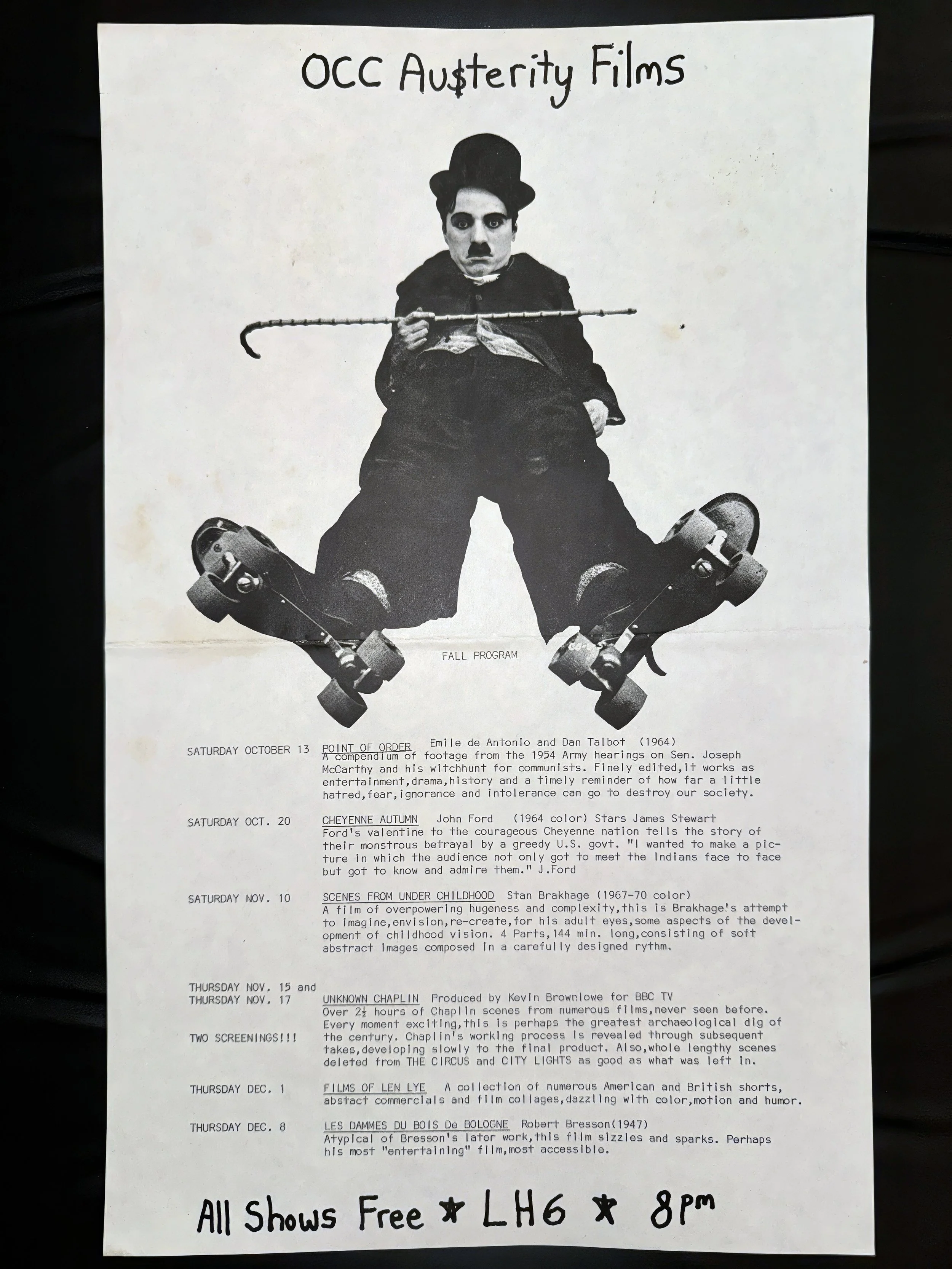
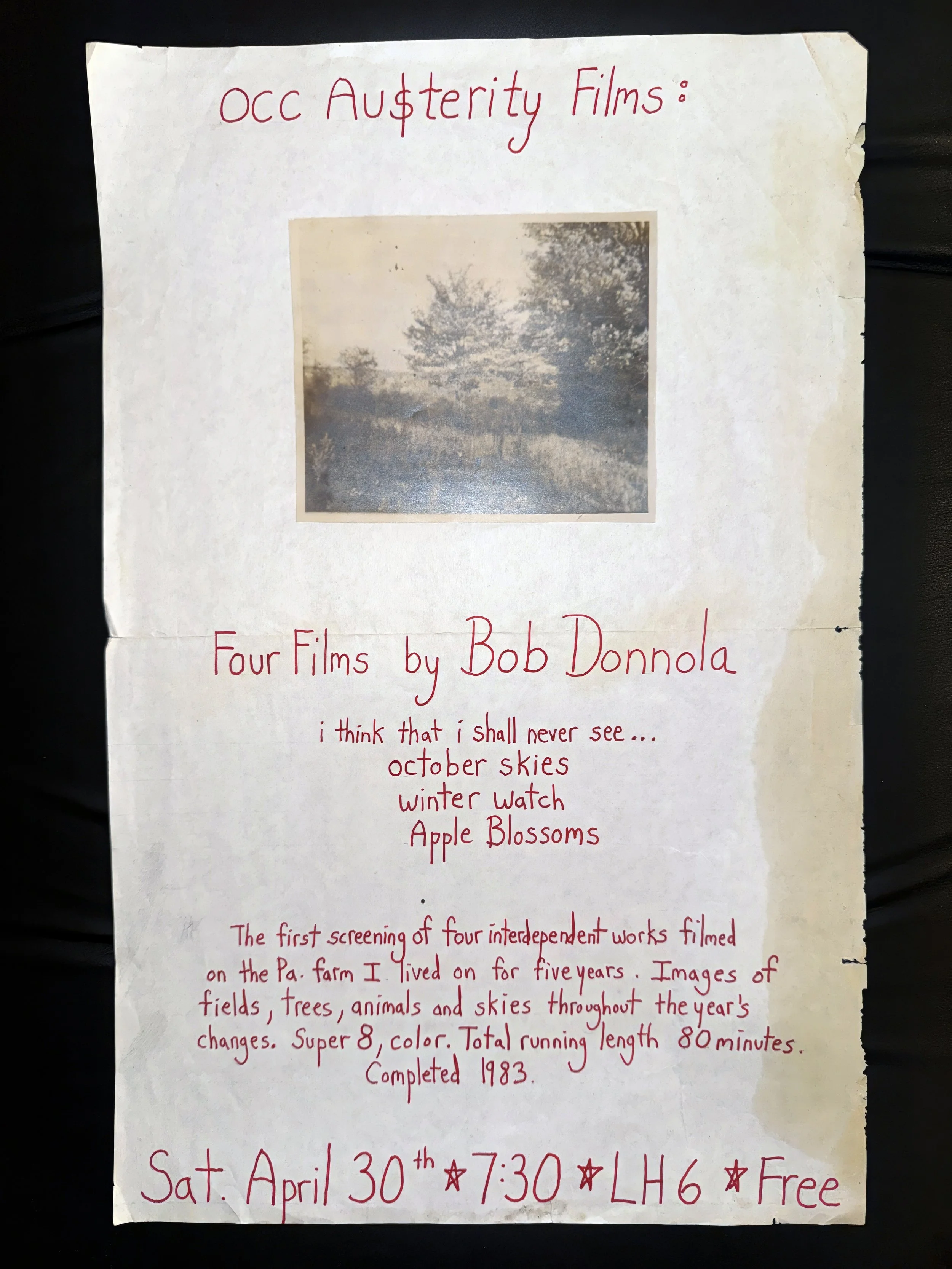
“Film, THE artform of the Twentieth Century has had a rich heritage, despite all efforts to maim it into submission by the powers that be. We are entitled to know this heritage as we do great music, literature and other visual arts. The cinema of Austerity Films is generally one that celebrates the human spirit and the evolution of our consciousness, whether the film be silent, independent, B film, documentary or commercial narrative.”
Austerity Films: 1976–1986
Austerity Films was founded by Robert Donnola at SUNY Binghamton as an alternative exhibition platform. For a decade, the project functioned as an independent inquiry into the medium, placing the American Underground in direct dialogue with the global canon.
The series juxtaposed the structuralist and mythopoetic experiments of figures such as Stan Brakhage, Ken Jacobs, and Kenneth Anger with the classical cinema of Carl Dreyer, Jean Renoir, and Douglas Sirk. Within this disciplined program, Donnola embedded his own pastoral Super 8 works—testing his personal vision against these historical weights.
Defined by its radical accessibility ("Free For All"), hand-crafted broadsides and xeroxed schedules, and an atmosphere of intellectual intimacy, Austerity Films acted as a critical intervention unencumbered by functional expedience.